Market overview
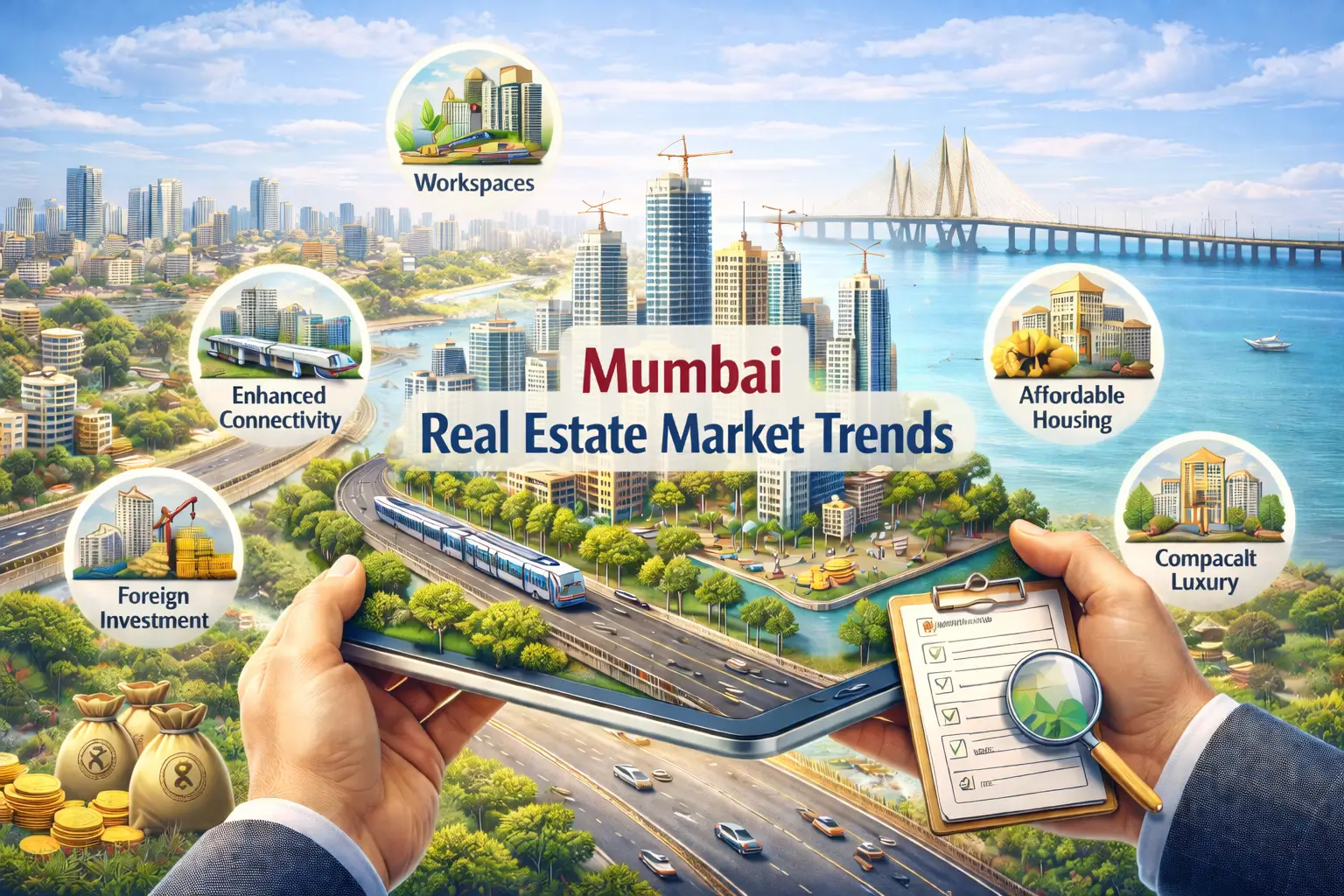
The Mumbai real estate market remains one of India’s most dynamic property sectors. As the economy strengthens and demand for residential and commercial spaces increases, Mumbai’s real estate market is positioned for continued growth in 2026.
While the COVID-19 pandemic significantly impacted Mumbai’s property market, recovery is well underway. Developers are adapting to evolving market conditions, supported by Mumbai’s growing population, its status as India’s financial and business hub, and government initiatives focused on affordable housing and infrastructure development.
However, challenges remain. Rising construction costs, liquidity concerns, and regulatory changes could impact market dynamics. Developers, investors, and homebuyers must understand these factors to make informed decisions in 2026.
Key factors driving market growth
1. The “Connectivity premium”
In 2026, property value is measured in minutes, not just miles. Major infrastructure projects have reached maturity, directly impacting micro-market prices:
Coastal road & metro line 3: These projects have revitalized South Mumbai and the Western Suburbs, with areas like Worli, Bandra, and Andheri experiencing 10–15% appreciation due to drastically reduced commute times.
MTHL (Atal Setu): This 21.8 km sea bridge has transformed Sewri and Wadala into gateway neighborhoods, while fueling a 20% price surge in Navi Mumbai’s Ulwe and Panvel areas.
Navi Mumbai international airport (NMIA): With the airport operational, surrounding “Aerocity” zones are witnessing massive institutional capital inflow and commercial demand.
2. Financial hub status
As India’s financial capital, Mumbai attracts significant corporate and professional activity. This creates sustained demand for office spaces and commercial properties, keeping the market robust.
3. Affordable housing initiatives
Central and state government programs are making homeownership more accessible in Mumbai. Financial incentives for developers, subsidized land costs, and regulatory support enable builders to deliver affordable housing options for lower and middle-income families.
4. Stricter regulatory governance (MahaRERA 2.0)
2026 marks a year of unprecedented accountability. MahaRERA has introduced new Standard Operating Procedures (SOPs) mandating compensation for delayed possession within 60 days. With over 1,900 projects suspended for non-compliance in the preceding year, only Grade-A developers with clean track records are dominating supply, significantly reducing buyer risk.
5. Foreign investment
Foreign capital continues flowing into Mumbai’s real estate sector. International investors view Mumbai as an attractive investment destination, a trend expected to strengthen throughout 2026.
Commercial real estate forecast
Commercial properties in Mumbai are experiencing significant transformation. Key trends for 2026 include:
Flexibility & hybrid hubs: Coworking spaces have evolved into “Managed Office Solutions,” preferred by multinational corporations seeking operational agility.
Sustainable “Green” workspaces: LEED-certified and carbon-neutral buildings command 10–15% higher rents as corporations align with global ESG goals.
Emerging micro-markets: While BKC remains the premium commercial hub, Vikhroli, Kanjurmarg, and Powai have emerged as new tech-finance corridors, offering modern amenities at more competitive rates than the Island City.
Warehousing & logistics boom: Driven by 15-minute delivery trends and e-commerce growth, demand for “in-city” warehousing in areas like Bhiwandi and Khopoli has reached all-time highs.
Residential real estate forecast
The residential market is adapting to changing buyer preferences and market conditions:
The compact luxury concept
As land prices reach new peaks, developers are perfecting “Compact Luxury”, smaller 1 and 2BHK apartments featuring high-end finishes and smart home technology. This caters to young professionals moving to Mumbai for opportunities in the BFSI and tech sectors.
Suburban maturity (Thane & Navi Mumbai)
The distinction between “suburb” and “city” is blurring. Thane and Navi Mumbai have evolved into self-sustained ecosystems and are now preferred lifestyle destinations offering gated communities with vast open spaces unavailable in the Island City.
Ready-to-move-in (RTMI) dominance
In 2026, buyers are showing a 70% preference for ready-possession or near-completion homes to avoid execution risks and immediately access tax benefits and rental yields.
Co-living spaces
Shared living arrangements are gaining popularity among young professionals and students seeking affordable, community-oriented housing options in Mumbai.
Market challenges
Rising construction costs: Increased material and labor costs impact project viability and pricing.
Population density: Limited land availability and growing population create space constraints.
Liquidity issues: Cash flow challenges affect project completion timelines.
Regulatory changes: Evolving compliance requirements require continuous adaptation from developers.
Conclusion
Mumbai’s real estate market is poised for significant transformation in 2026. Both commercial and residential sectors are experiencing dynamic changes driven by infrastructure development, regulatory reforms, and evolving buyer preferences.
Success in Mumbai’s real estate market requires staying informed about these trends and understanding how connectivity, sustainability, and regulatory compliance are reshaping the landscape. Whether investing, developing, or purchasing property, stakeholders must carefully evaluate market dynamics and choose established developers with proven track records.
Frequently asked questions
Everyone is talking about "Third Mumbai." is it a real investment or just hype?
It is a long-term reality. With the Atal Setu (MTHL) and the Navi Mumbai Airport nearing full operational status in late, areas like Ulwe and Dronagiri are no longer “ghost towns.”Don’t expect a 2x return in 1 year. This is a 5-to-7-year play. If you need to live there now, check for social infrastructure (schools/hospitals), which is still catching up to the residential buildings.
What are the key trends in the Mumbai real estate market?
Major trends include luxury compact homes, co-living spaces, sustainable green buildings, improved connectivity through infrastructure projects, and dominance of ready-to-move-in properties.
What is the forecast for Mumbai real estate?
The market is expected to grow with flexible office solutions, technology-driven operations, enhanced amenities, suburban area development, and continued infrastructure improvements. Ready-possession properties and sustainable developments will dominate buyer preferences.
What are the key challenges facing the Mumbai real estate market?
Primary challenges include high population density, limited land availability, rising construction costs, liquidity issues for developers, and the need to comply with evolving regulatory requirements.
How easy is it to sell a flat in Mumbai if I need the money quickly?
It is surprisingly difficult for older buildings. Buyers are obsessed with “Lifestyle Amenities” (Gym, Pool, EV Charging). If your building is 20+ years old without these features, expect a 20% to 30% lower price and a 6-to-12-month waiting period to find a buyer. Flats in new gated communities sell much faster.